About Nedixa
Communication is not a personality trait.
It is the foundation of everything that happens at work.
When communication is unclear, the cost shows up in time, errors, and avoidable conflict. Nedixa exists to make workplaces more human. Communication is the infrastructure of work — the primary tool through which decisions are made, relationships are built, and people are included or excluded. When it is unclear, everything becomes harder.
Most workplaces were designed for output. The result is environments that generate unnecessary cognitive and relational strain — not because the people in them are inadequate, but because the design is. We start where the friction starts. With the everyday habits of how instructions are given, how requests are made, how meetings are run, how feedback lands. Small things, repeated daily, that accumulate into significant cost — operational, human, and legal.
The most reasonable adjustment an organisation can make is to design communication so that different minds, different working styles, and different processing needs are accounted for from the start. That is an attitude shift, and it is where Nedixa begins.
Nedixa trains organisations to communicate deliberately — through practical behaviour change in how instructions are given, meetings are run, feedback lands, and collaboration is structured.
Around 15–20% of the UK workforce is neurodivergent. Most navigate workplaces built for a narrower range of processing styles. Effective neuroinclusion moves beyond individual accommodation — it redesigns the communication habits everyone uses, so that what works for the people it is hardest for works better for the whole organisation. This is not a niche requirement. It is a systems advantage.
We are here because we believe change begins individually — and that when communication works for the people it is hardest for, it works better for everyone. Clarity reduces risk. Inclusion increases performance. What is vital for some, benefits all.
What is vital for some, benefits all.
The skill everyone praised me for was the skill that cost me the most to perform.
Early Recognition
I have spent 24 years working across organisations — in emergency communications, teaching, policy, law, and consultancy. In almost every environment, I was known for the same thing: clarity. Clear asks. Clear instructions. More than once I was told that the way I structured a request should be a model — that if more people communicated that way, everyone would work better.
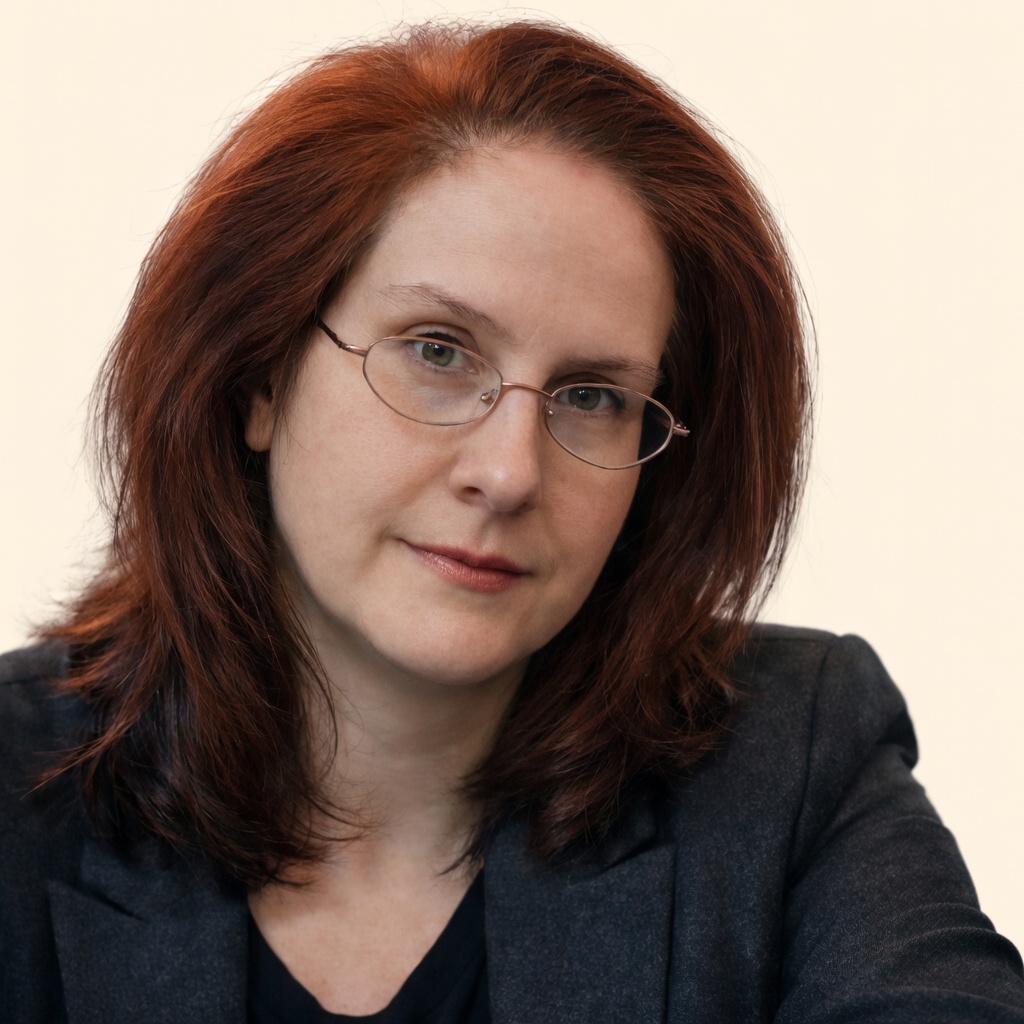
I was also, in those same years, running on empty.
Communication did not come naturally to me. What looked like a talent was a system — built deliberately, painstakingly, because it had to be. I learned to communicate precisely the way someone learns a second language: by studying the structure, mapping the rules, practising the patterns until they became automatic.
Hungarian is my mother tongue. I started learning English properly at thirteen. Working across multiple languages and linguistic systems gave me something most native speakers never develop — a structural relationship with communication. The way a sentence is built. The logic underneath an ask. The gap between what is said and what is understood.
I had been learning the rules of rooms not built for how my mind works since early childhood. I felt like an outsider in most of them. Around the age of twelve, a medical professional noted Asperger’s syndrome in passing. It was a different era — the kind in which observations like this, made about girls, were simply filed away. So it was. Forgotten by everyone, including me.
Emergency Communication Under Pressure
In the early 2000s I worked for the International Federation of Red Cross and Red Crescent Societies — in Pakistan, in the Middle East, at the intersection of the Afghan war, the earthquakes, and the mass displacement of people across the region. It was emergency response communication — directing information under conditions where ambiguity was a humanitarian risk.
Under that pressure, something in me became very still and very clear. I work best when the stakes are real and the communication has to be exact. That clarity became a reference point I have never lost.
Systems, Law, and Advocacy
I came to the UK and taught — English language and literature, humanities, law, history, and politics in London secondary schools. The transmission of knowledge felt like a purpose. But the environments were exhausting in ways I could not yet name. Every term ended in exhaustion I could not explain. Every holiday became recovery that never quite finished. The pattern repeated. I still had no name for it.
Law gave a structure to something I had always felt — a drive to understand systems and to speak up when they failed people. When I saw the system failing someone — a foreign national, a disabled colleague, a mother returning to work — I spoke up. Informally, always freely, grounded in legal knowledge I had spent years building. The instinct to see structural failure clearly, name it precisely, and make sure the person inside it could be heard — that instinct is at the root of everything Nedixa does.
My primary role in the civil service was as a policy adviser across two government departments. Within that role I advanced inclusivity work, sat on equality, diversity and inclusion panels, and received formal recognition for it. I remained the person colleagues came to when something needed to be said precisely.
Then came the chain. Over fifty people copied across five cabinet departments. No clear owner. No clear ask. No resolution in sight. I could see exactly what needed doing and I did it. A more senior colleague told me, in the chain, that I had made a mistake — that I had acted without consulting the right people first. She was right about the process. The chain kept growing.
I learned silence after that. Not indifference — I never stopped seeing the chains. I just stopped reaching for them. I watched the same thing repeat, meeting after meeting, inbox after inbox, for years. Knowing exactly how to stop it. Saying nothing.
Breaking Point and Diagnosis
The birth of my child was the turning point. The mask — held since early childhood, held so completely — became unsustainable. The assessments that followed uncovered the childhood note of Asperger’s syndrome — filed and forgotten decades earlier. Something that had always been known and never been accommodated for.
The diagnoses did not change who I was. They explained it. (standout line — Public Sans SemiBold — slight additional whitespace above and below to give it room, larger spacing for example)
The Spark
When the announcement came that the civil service would be redesigned from the ground up, something shifted. The system I had spent years working inside — trying to make it work better, one communication habit at a time — was changing beyond recognition. Going back into it, or continuing inside it, was no longer a question with a clear answer. The restructure was not the reason Nedixa exists. But it was the moment the door opened.
I accepted voluntary redundancy. I finished at the end of that year.
The idea for Nedixa did not arrive in an office. It arrived at a playground in London in September 2025, in a conversation with a friend about what could come next. More questions, as always — typical me, analysing. What if the solution was not individual reasonable adjustment requests filed one at a time, but changing the individual communication behaviours that build the system itself? One behaviour, one interaction, one person at a time.
Everything I had observed, experienced, studied, and built — across emergency response, advocacy, policy, law, teaching, and more than twenty years of watching how workplace communication actually breaks down — had a shape. And that shape was a training methodology for neuroinclusive workplace communication.
I registered Nedixa in London on 1 October 2025.
I know, from the inside, what it costs to navigate environments built for a different kind of mind. I also know — from more than two decades of evidence — that when communication is designed deliberately, when clarity is treated as a learnable skill, when the people it is hardest for are designed for first, everything works better. For everyone.
Most people who mask long enough eventually forget they are doing it. The system becomes invisible. The cost does not.
I have been observing it across languages, cultures, organisations, and crises — first as a foreign national, then as someone translating between systems, and later as a mother.
Before understanding that the effort was not a character flaw. It was a survival mechanism.
I am done being told it exceeds my remit.
Our Mission
Work runs on communication. The organisations that treat it as a system to be designed, rather than a skill to be assumed, work better at every level. Nedixa exists to build that design.
We believe workplaces can be more human, that communication is where that change begins, and that it happens individually before it happens collectively — one interaction, one habit, one person at a time. For the people it is hardest for first. Because what removes a barrier for some removes friction for all.
Designed for difference. Effective for everyone.

Contact
Address: 167-169 Great Portland Street, London W1W 5P
Phone: +44 7447 583758
E-Mail: hello@nedixa.co.uk
© 2026 Nedixa Communications and Training Ltd
Reg: 16756793